
The Quiet Craft of Precision: How Simple Surgical Tools Shape Life-Saving Moments
The Tools We Rarely Think About
There’s something almost poetic about the simplicity of certain medical tools. In a world increasingly dominated by advanced machines, robotic systems, and digital monitors, it’s easy to forget that some of the most important instruments in surgery are still remarkably simple.
They don’t beep. They don’t flash. They don’t run on electricity.
And yet, without them, surgery as we know it wouldn’t exist.
Walk into an operating room and you’ll notice trays arranged with careful order — each tool placed exactly where it needs to be, ready for the surgeon’s hand. It’s not random. It’s choreography. Every instrument has a purpose, and every purpose matters.
These tools may appear ordinary at first glance, but they carry extraordinary responsibility.
Where Precision Begins
Long before complex machines became common in healthcare, surgery relied heavily on manual skill. And even today, that hasn’t changed as much as one might think.
At the heart of most procedures are hand instruments, designed to give surgeons direct control over their movements. These tools function as extensions of the human hand — translating skill, experience, and judgment into precise action.
What makes hand instruments remarkable is their balance between strength and delicacy. They must be sturdy enough to handle tough tasks, yet sensitive enough to operate within fragile tissues.
Consider how much depends on the feel of an instrument. Surgeons often talk about how certain tools “sit” in their hands — whether they offer a secure grip, how smoothly they move, or how responsive they feel during use.
It’s a tactile relationship that machines simply can’t replicate.
The Role of Control and Stability
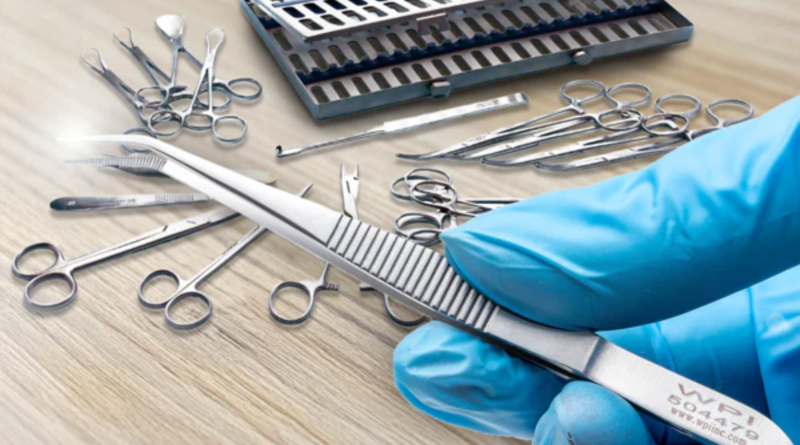
Among the most commonly used surgical tools are forceps, which might seem simple but play a crucial role in almost every operation.
Forceps allow surgeons to hold, grasp, or stabilize tissues with remarkable precision. Some are designed for delicate handling — like holding tiny blood vessels — while others are built for stronger grip, used in more demanding procedures.
Their design reflects an understanding of human anatomy and surgical needs. Fine tips allow for accurate positioning, while textured surfaces ensure that tissues don’t slip during critical moments.
What’s interesting is how forceps can influence the pace of a procedure. A well-designed tool can make movements smoother, reduce strain on the surgeon’s hands, and help maintain consistent control throughout an operation.
It’s a subtle but powerful impact — one that often goes unnoticed by patients.
The Art of Clean, Precise Cuts
Another indispensable instrument in surgery is the scissors used for cutting tissue, sutures, and other materials during procedures.
Unlike everyday scissors, surgical versions are engineered for exceptional sharpness and accuracy. They must cut cleanly without crushing surrounding tissue, which is essential for proper healing.
There are many different types — curved scissors for working in tight spaces, straight ones for surface-level cutting, and ultra-fine versions designed for delicate procedures.
The quality of a surgical cut matters more than most people realize. Clean incisions reduce trauma, minimize bleeding, and support faster recovery.
In many ways, scissors represent the intersection of craftsmanship and medical science — a simple concept perfected through decades of refinement.
Why Simplicity Still Matters in Modern Medicine
With all the technological advancements in healthcare, it might seem surprising that basic manual instruments remain so central to surgical practice.
But there’s a good reason for this.
Manual tools provide something that even advanced machines struggle to replicate: direct tactile feedback. Surgeons can feel resistance, sense subtle changes in tissue texture, and adjust their movements instantly.
This level of responsiveness is essential, especially during complex procedures where precision must be guided by both sight and touch.
Additionally, hand instruments are reliable. They don’t depend on power sources, software updates, or technical maintenance. When sterilized and maintained properly, they can function flawlessly for years.
Sometimes, simplicity isn’t a limitation — it’s a strength.
The Human Connection Behind the Tools
There’s also an emotional dimension to surgical instruments that often goes unspoken.
Surgeons develop familiarity with their tools over time. They learn how each instrument responds, how much pressure to apply, and how to adapt their technique based on the situation.
It’s similar to how a musician feels about their instrument. There’s trust involved — a quiet confidence that the tool will perform exactly as expected when it matters most.
Behind these tools are also the skilled professionals who design, manufacture, and maintain them. Engineers, technicians, and sterilization specialists all contribute to ensuring that each instrument meets strict safety standards.
It’s a collaborative effort that supports the surgeon’s work from behind the scenes.
Looking Toward the Future of Surgical Tools
Even traditional surgical instruments are evolving.
Manufacturers are experimenting with advanced materials that are lighter, more durable, and resistant to corrosion. Ergonomic designs aim to reduce hand fatigue during long procedures. Some tools even incorporate subtle technological enhancements, such as improved grip surfaces or specialized coatings.
These innovations reflect an ongoing commitment to improving both surgical performance and patient outcomes.
Yet despite these advancements, the fundamental purpose of these tools remains unchanged — enabling precise, controlled, and safe surgical care.
A Quiet Yet Powerful Role
Most patients will never see the tools used during their surgery. They’ll remember the experience differently — perhaps the relief of a successful procedure or the gratitude they feel toward their medical team.
But behind every operation lies a carefully arranged set of instruments, each playing its part with quiet reliability.