
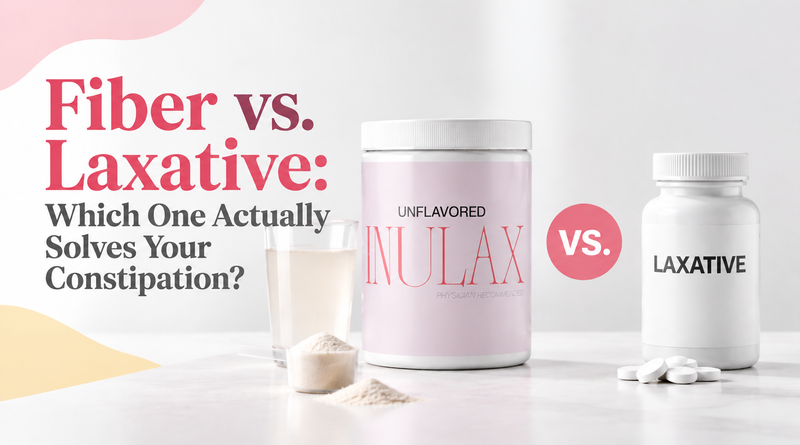
Fiber vs. Laxative: Which One Actually Solves Your Constipation
Standing in front of a shelf lined with laxatives and fiber supplements side by side, it’s easy to assume they’re basically interchangeable, just different brands promising the same relief. They’re not, and understanding that difference changes which one actually deserves a spot in your daily routine versus your emergency cabinet. One works with your body’s natural process, the other works around it.
Fiber and laxatives both help manage constipation, but they solve fundamentally different problems on fundamentally different timelines. Knowing which one fits your actual situation, an occasional bad week versus an ongoing pattern, makes the choice a lot less confusing than the pharmacy aisle makes it look.
What Actually Separates Fiber From a Laxative
Fiber is a dietary component that adds bulk and softness to stool gradually, working as part of your everyday intake rather than as a targeted intervention. A laxative, by contrast, is specifically designed to trigger or ease a bowel movement more directly, whether by pulling water into the intestines or stimulating muscle contractions in the colon. Dulcolax notes that fiber works gradually as a foundational, everyday approach, while laxatives are typically reserved for shorter term, more immediate relief.
That distinction in mechanism explains almost everything else about how the two compare. Fiber supports the digestive system’s own rhythm over time, while a laxative essentially overrides that rhythm to force a faster result. Neither is inherently better in every situation, but they’re built for very different jobs.
What Is the Best Plant-Based Fiber if You’re Choosing the Gradual Route?
Committing to fiber as your primary approach means the ingredient quality actually matters. What is the best plant-based fiber for someone choosing consistency over speed? Psyllium husk consistently ranks among the most researched options, known for its bulk forming, water absorbing properties that ease stool through the digestive tract without forcing anything.
Inulin, sourced from chicory root, adds a prebiotic layer that feeds beneficial gut bacteria rather than simply passing through. What is the best plant-based fiber when comparing a single ingredient to a blended formula? Combining several natural sources, rather than relying on just one, tends to deliver broader support across multiple aspects of digestive health at once.
Why a Fiber Blend Tends to Outlast a Laxative Habit
Leaning on a laxative repeatedly, especially the stimulant kind, carries a real tradeoff worth understanding before it becomes routine. Repeated use can condition the bowel to depend on that forced trigger, making it harder for the digestive system to function predictably without one. A fiber based approach avoids that risk entirely, since it supports the body’s own process instead of overriding it session after session.
This is exactly where Inulax fits into the picture, built around inulin, psyllium husk, and beta glucan oat fiber rather than a single ingredient or a harsh stimulant compound. Most people notice a difference within three to five days of consistent use, a timeline that reflects gradual, sustainable change rather than a forced same day event. What is the best plant-based fiber for someone tired of cycling through stronger and stronger laxatives? Usually, a complete blend like this one, addressing the underlying pattern instead of repeatedly treating the symptom.
Can You Take a Laxative and Fiber Together?
Can you take laxative and fiber together, or does combining them cause problems? In many cases, yes, and plenty of people use fiber as their daily baseline while reserving an occasional laxative for situations like travel or a particularly stubborn week. That said, timing and dosage matter, since taking both at once without enough water can occasionally worsen bloating or discomfort rather than help.
Checking with a doctor or pharmacist before combining the two regularly is always the safer move, especially if you’re already taking other medications. For most people, though, fiber as the everyday habit and a laxative as the rare backup tends to be a sensible, well balanced approach rather than an either or decision.
Choosing the Right Tool for Where You Actually Are
Someone dealing with a single, uncomfortable day might reasonably reach for a laxative and move on without a second thought. Someone dealing with recurring, unpredictable bowel habits week after week is almost always better served by building a consistent fiber routine instead, since that’s the approach designed to prevent the problem rather than just interrupt it once it’s already happening. The right choice really comes down to whether you’re solving a one time problem or trying to stop the same problem from returning.
Pairing that decision with proper hydration, regular movement, and consistent meal timing rounds out whichever path fits your situation best. Neither fiber nor a laxative works in isolation nearly as well as it does alongside those basic daily habits.
The Right Tool Depends on the Problem You’re Actually Solving
Fiber and laxatives aren’t competing products, they’re different tools built for different situations, and knowing which one you actually need makes the whole decision far less confusing. For most people dealing with recurring irregularity, a consistent fiber routine tends to solve the underlying pattern in a way an occasional laxative never quite can.
Ready to build your daily routine around a gentler, more sustainable approach? Explore Inulax and start your first 7 days today.
This article is for general wellness information only and isn’t a substitute for medical advice. Statements about supplements have not been evaluated by the FDA, and individual results may vary. Talk with your healthcare provider before starting any new supplement.
FAQs About Fiber vs. Laxative and Inulax
What is the best plant-based fiber to use instead of a laxative?
Psyllium husk paired with inulin and beta glucan oat fiber tends to offer the most complete, gentle support. Inulax is built specifically around that combination for consistent daily use.
Can you take laxative and fiber together safely?
Generally yes, with fiber as a daily baseline and a laxative reserved for occasional situations, though checking with a doctor first is always the safer approach. Adequate hydration matters more when combining the two.
Is fiber or a laxative better for long term constipation?
Fiber is generally considered the better long term choice, since it supports regularity without the dependency risk that comes with repeated laxative use. Laxatives are better suited for occasional, short term relief.
How is Inulax different from a traditional laxative?
Inulax works through a natural fiber blend that supports regularity gradually, rather than forcing a single fast bowel movement the way a stimulant laxative does. That gentler mechanism tends to hold up better for daily, ongoing use.
How long does fiber take to work compared to a laxative?
Fiber supplements like Inulax typically take three to five days of consistent use, while stimulant laxatives often work within six to twelve hours. The tradeoff in speed generally reflects a gentler, more sustainable process.
Should I try fiber before reaching for a laxative?
Many doctors recommend fiber first for normal, everyday constipation, reserving laxatives for situations fiber alone hasn’t resolved. Starting with the gentler option tends to prevent escalation to something stronger.